
Richard on the Issues
Areas of Concern
Financial Stability
A continued theme and ongoing issue. Despite proactive strategies, responsible budgeting by city council, and creative ways to deal with potential budget deficits by our City Manager, the city is still facing financial issues. We are over-reliant on permit fees from development and new construction, these are one time revenue sources. The voters approved a 1% sales tax in 2024 (passing with 60.34% voting Yes) which makes our city's financial position stronger.
But, as recently as Fiscal Year 2025-2026 we had almost no development or growth, which resulted actual revenue being $700,000 under the budgeted projection. That combined with the same inflation we all feel in our daily lives resulted in a break-even year rather than a $400,000 surplus we would have had if all revenue met projections.
The bottom line is we need to diversify funding and encourage recurring revenue sources, not hope for one-time funds.
Approach to address this issue:
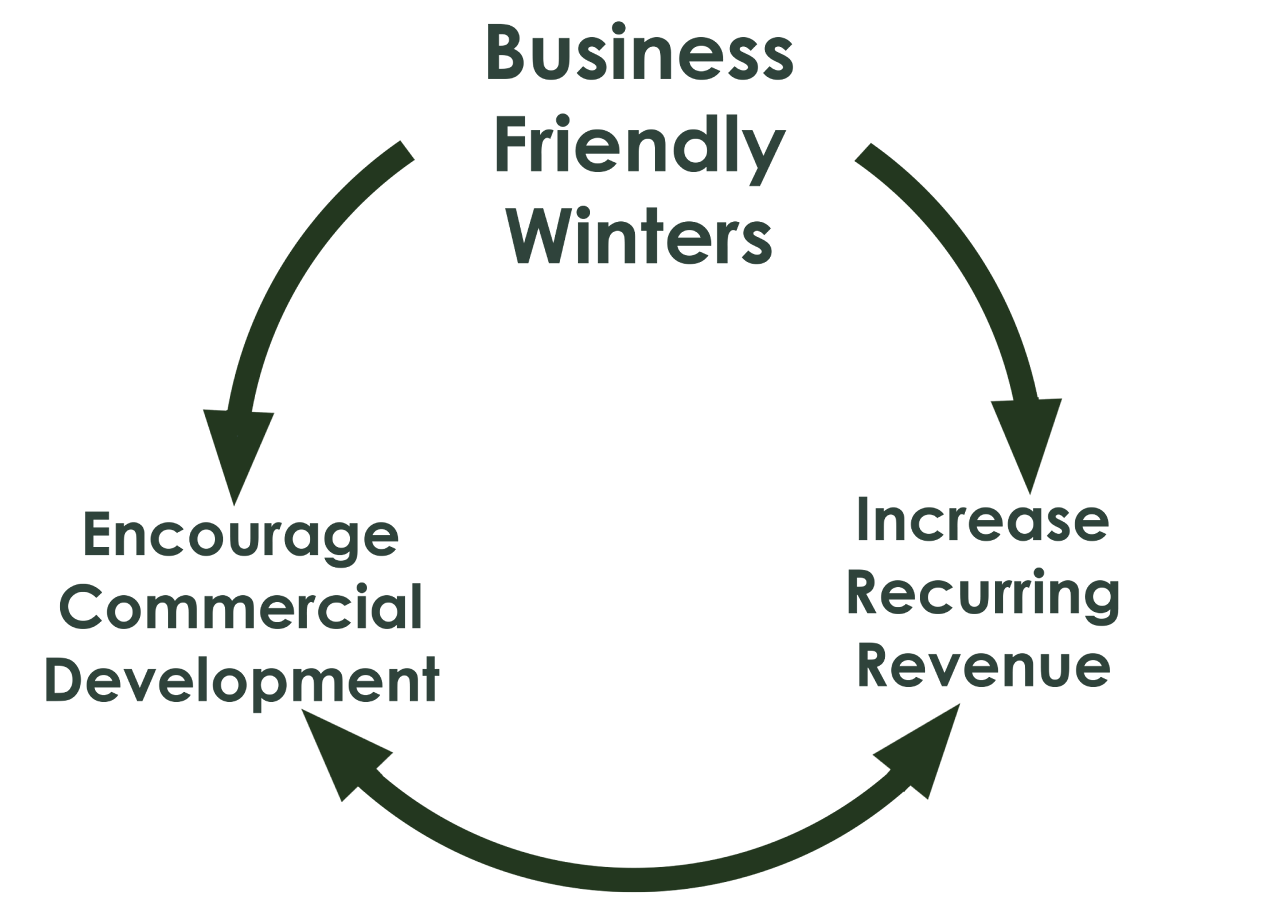
I believe this can be improved through three mutually supporting goals.
Making winters a good place to open a business.
Encouraging commercial development.
And increasing recurring revenue sources.
A business friendly environment encourages both commercial development and the opening of new businesses to provide recurring revenue. Commercial development enables new businesses. And the success of new businesses encourages more commercial development. This is not a complete fix, but it lays the groundwork for a more resilient financial position.
Make Winters "Business Friendly". Simply put, we have to stop trying to control the market and let the collective individual ideas try, fail, and succeed. City Council should endeavor to make our reputation as "Winters is Open for Business". More businesses mean more jobs and more recurring revenue for the city for maintenance and services. Part of this is allowing businesses to take risks, and accepting that doing so may marginally increase the city’s own risk.
Increase Recurring Revenue Sources. City revenue relies heavily on one-time permit fees that necessitate continual development to maintain funding levels. Fiscal Year 2026 revenue missed projections by nearly $800,000 because development projects hit roadblocks and didn’t begin. Recurring revenue streams that can be shouldered by visitors rather than residents need to make up a larger share of our funding.
Encourage the Development of Commercial Properties and foster an environment that businesses want to relocate to. This is not yet a trend, but we have had two large businesses purchase property to build in town, with a third in process.
We are very short on commercial space. Businesses that are here tend to stay here, and no new commercial buildings have been built for a while. Regardless of how business-friendly we get, if there is no place to open new businesses, they will not come.
This is done by focusing on growing recurring revenue rather than reducing one-time revenue.
Reducing one-time revenue without growing recurring revenue will necessitate cuts to staff and services.
Recurring revenue, like the sales tax, shifts much of the tax burden onto people who visit Winters. Ideally, most of our funding would come from non-residents. The task for the city is to now encourage economic growth to increase the value of that tax
Recreation
We need a unified Parks, Recreation, and Natural Resources Committee to provide more direct feedback to city council on the recreation needs and desires of children and families in town. I have been advocating for improved street design standards to make safe protected bike lanes a priority so children, students, and adults in town have a place to ride their bikes that doesn't force them to share the road with vehicles or endanger pedestrians on a sidewalk.
Strategies
Infill sports fields. We need more field space that is appropriate for kids sports games and practices. People often ask for a sports park, but that brings a whole new set of problems and costs that we cannot afford, even if we had $20M to build the facility. The best solution is to add smaller field space when and where we can as a design element of new neighborhoods and redevelopment. Space is at a premium in Winters, so the best strategy is to build the capacity of a centralized sports park, in aggregate.
Protected Bike Lanes. Protected bike lanes should be the standard, not an option. A protected bike lane has a buffer between the cars in the road and people riding bikes. This can be anything from a flexible bollard, a median, a curb, a painted 1-3' safety buffer, or even parked cars between the bikers and the flow of traffic. Bike lanes should also be a standard feature on all streets so kids don't have to ride in the street or on sidewalks.
Maintain the creek infrastructure. There is no gentle way to say it other than homeless people who have taken up temporary illegal residence in the creek have made it dangerous to enjoy the park. Due to water pollution and both drug and mental health episodes, the creek is no longer the family environment that it was. This is a complex problem, and the police do what they can, but a committee with both a recreation and natural resource focus in its charter would create a single place to track and report on status and issues to help better report needs. Current city discussions relating to the creek have focused on use of the park through an ecology-first perspective, not a people focused view.
Safe Streets
Speed kills. But speeding is a result of street design; design dictates driver behavior. Simply put, people will drive as fast as they feel comfortable based on the layout and feel of a street. Long, straight, and wide streets (like Walnut, Neimann, and parts of Taylor to list a few) feel more like a highway than a place for people, and drivers respond by driving faster. We want some streets faster to keep cars moving, others we want slower so people can use them or so drivers stop and patronize the businesses on them. Our street designs should reflect that.
Strategies
Safer streets through better design. Our street standards need to reflect the way people who live and work on a given street use it. Government most often discusses street design in terms of circulation plans and traffic throughput in vehicles per hour, focused on cars, not people. We should strike a balance with vehicle throughput and human use.
Simple changes like painting lines can yield dramatic results in terms of slower speeds. Drivers with lines to stay between instinctively do not want to cross them, and drive at a speed that they are able to do so. This sounds incredibly simple, because it is.
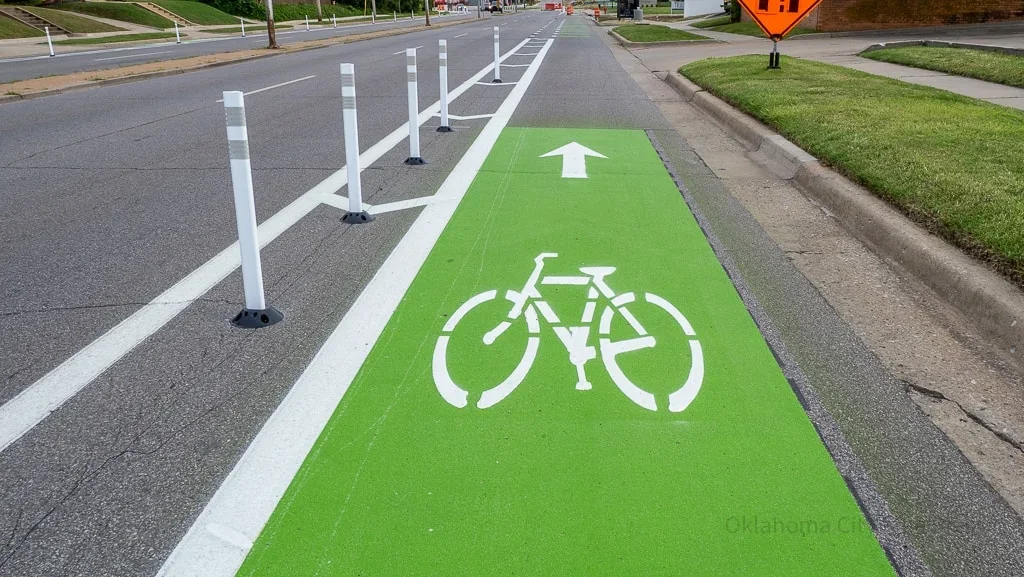
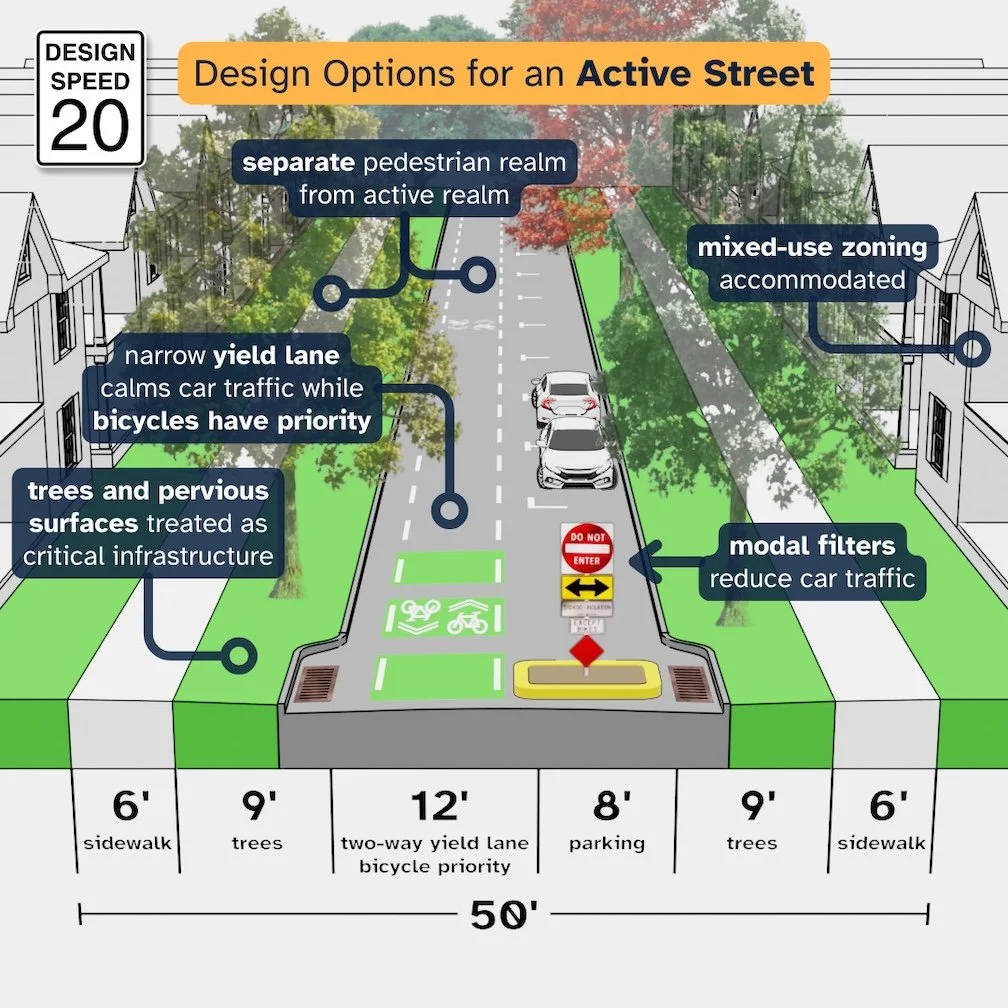
Image credit: Strong SacTown
Deconflict use. Streets inevitably have different types of transportation competing for space. Cars, bikes, and pedestrians will eventually intersect. Safe street design ensures a tragedy doesn't occur when a car and a person want to be in the same place at the same time. I have already brought this up but so far there hasn't been any progress or emphasis on deconfliction.
Physical street design elements help prevent injury and death of the slower moving person or object. In early 2026, a Davis woman was killed on a walking path by a fast moving bike. Deconfliction through design could have helped prevent that tragedy. We do this by ranking which mode of travel should be prioritized; I believe the slower methods should be top of the list.
We need to set priorities in design. When we identify a point where cars, bikes, and people may intersect, our public works and engineer team can build in protective designs. Examples would be protected bike lanes, longer line of sight, shorter pedestrian crossings that are exposed to cars and bikes (we have an example of this at Railroad and Carrion Cir).
4th Amendment
For the past year, Winters has had a contract with Flock Security for 10 Flock Cameras at the entrances and exits to town, logging the movements of everyone and making them available to Flock's nationwide surveillance network. After extensive reading on the network and hardware security issues, recent Supreme Court decisions (Carpenter v US in 2018 and Chatrie v US in 2026), and examples of misuse and abuse of this network by other agencies, I do not believe inserting ourselves into this surveillance network is a net good. I have lost trust in the company based on their public statements, actions, and characterizations of valid criticisms (that they are only now walking back). Most importantly, I believe network created by Flock and its competitors has expanded to a point where it violates the 4th Amendment and should require a warrant to collect data and access.
Concerns:
Warrantless long-term monitoring and recording of everyone, without reasonable suspicion or probable cause. This is done to gather evidence in case a crime is committed. This flips the basic structure of our criminal justice system upside down. We gather evidence on crimes, not people until we find a crime. Fundamentally, government should not be able to record your movement history without a compelling reason specific to you.
Blanket surveillance is analogous to a “General Warrant” (aka Writ of Assistance) that specifies an offense and allows law enforcement discretion as to which places should be searched, and who should be arrested. General Warrants issued by the British Crown before the American Revolution were the reason the 4th Amendment was written.
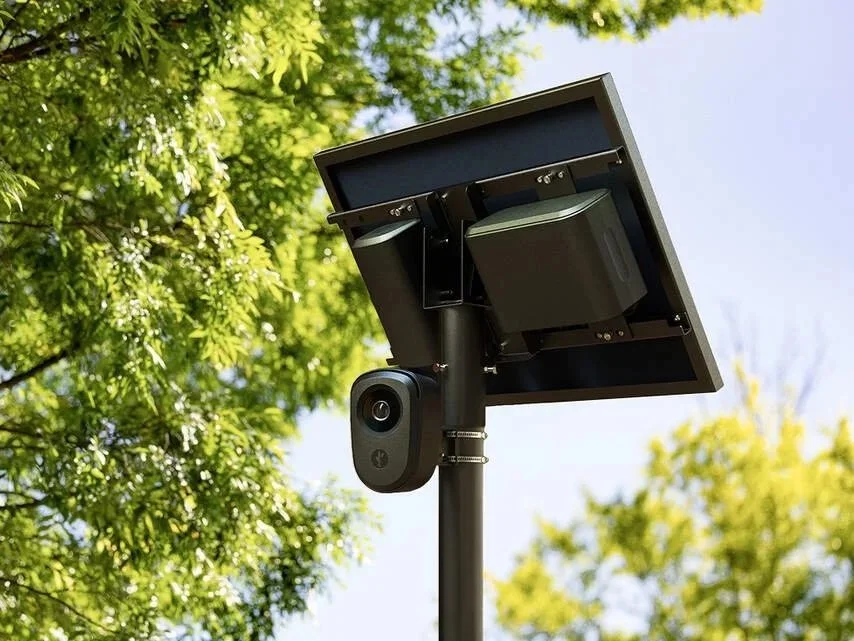
Constitutionality. Proponents in support of this technology inevitably argue that there is no expectation of privacy in public. This is typically true when applied to your actions in a public space and being recorded by private citizens and the government, but that statement is misleading and not completely correct.
The Supreme Court has held (Carpenter 2018) that society's expectation of privacy is that law enforcement will not monitor and catalog the whole of individuals' movements over an extended period. Flock cameras and the like have gaps in coverage which allow them to skirt this ruling. However, precedent has not caught up with technology yet. When it does, I believe that societal expectation will (and should) to this technology too, and at minimum a warrant should be obtained before cataloging anyone's movements as is already required for GPS.
In the Chatrie case, warrantless blanket surveillance was ruled unconstitutional as well. Law enforcement requested a listing of all cell phones in a geographic area, then used that information to request a warrant for a specific device. The court ruled the first search also required a warrant, a search that is not all that dissimilar to how the Flock network functions, collecting blanket information to inform specific searches.
Poor security practices by the company. An information security expert characterized Flock's devices as "a hackable ALRP device with an unlocked bootloader, debug Android OS, and exposed diagnostic mode." Essentially, it's a device with no security enabled. Around 90 flock cameras have been identified by researchers as being fully accessible from the web without the need for login credentials. The company claimed they were improperly set up, but how many other cameras that haven't been discovered by a well-meaning 3rd party are out there for bad actors to take advantage of?
Access control. Winters has a robust Flock policy and a small staff that makes it easy to prevent misuse, but we do not have any control over how other agencies access our cameras once we agree to share data. In January 2026 one partner agency ran a search on behalf of a federal agency in violation of state law; our data may very well have been included in the search, potentially exposing the city to liability if there is a lawsuit. Our internal access policy gives us no method of prevention nor remedy against the individual responsible.